
Bathroom floor plans: proper planning from scratch | Duravit


Bathroom Floor Plans
Inspiration & Planning
If you want to redesign your bathroom, the first order
of business is to take a look at the bathroom floor plan. When it comes to new construction, there
are a lot of things to consider: from its location in the house to natural
light sources and the placement of partition walls. If you are renting, or
remodeling an existing bathroom, you can use the floor plan to make decisions
about the optimal way to make use of the available space. The following article
will explain what you need to pay attention to and how bathroom planning using a floor plan works.

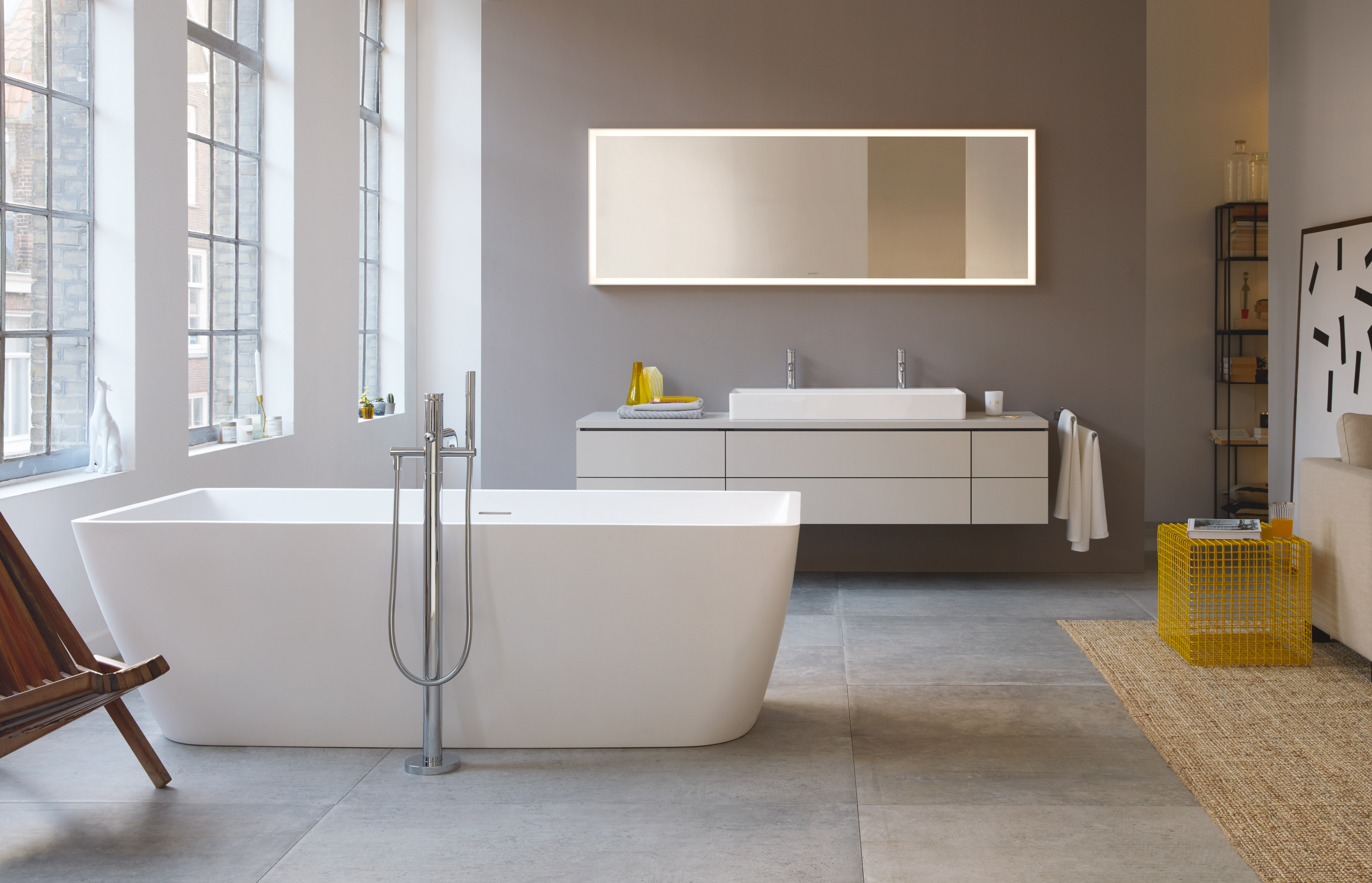
What is absolutely essential for your bathroom?
Before you start planning in greater detail, it's always a good idea to decide on the essential items for your bathroom. Have you always wanted a bathroom with a sauna? This needs to be taken into account in the floor plan, so you can be sure that the necessary connections are available and that there is enough space. You'll also want to be sure that the right cables and pipes are installed if, for example, you're going to install underfloor heating. If you're planning an accessible bathroom, on the other hand, the floor plan needs to take all the relevant requirements into account. The best approach is to prioritize your requirements for your bathroom so that you can be clear about these priorities when you start planning in greater detail.

Who will use the bathroom?
The question of essential items in the bathroom goes hand in hand with the question of who will be using it. The answer to this simple question will help you make a lot of other decisions about how to plan your bathroom. If you're planning an en suite bathroom, logic dictates that it should be next to the bedroom. A small bathroom floor plan is usually fine for an en suite. On the other hand, the main bathroom in the house should be spacious and in a location where everyone can get to it easily.
What architectural features need to be considered?
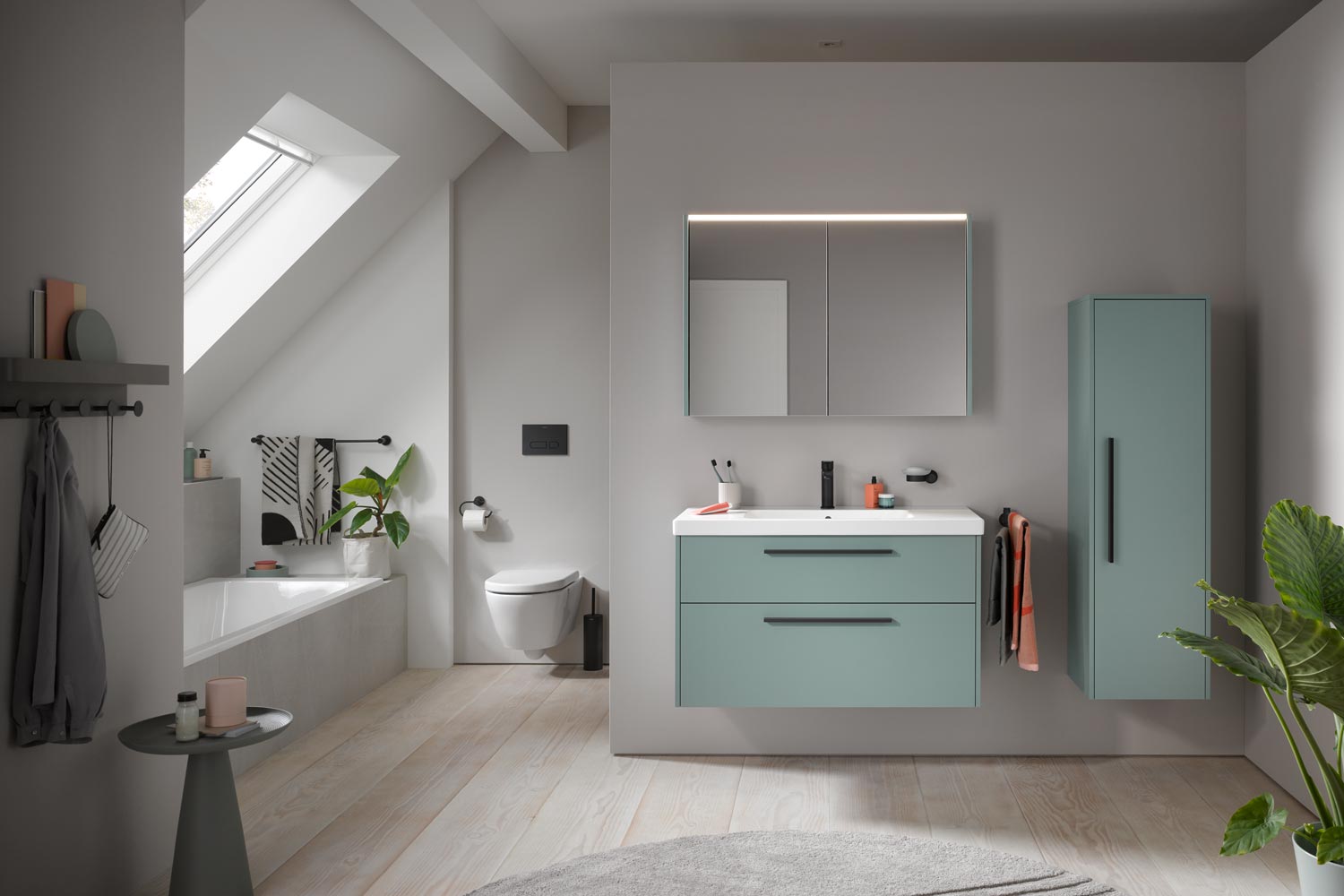
Bathroom floor plans are always based on the existing structural conditions. Whether it's new construction or a remodel, there are almost always structural considerations that need to be taken into account. For example, an oversized bathtub will require an appropriately reinforced foundation. Another example is a bathroom with a sloping ceiling, where the floor plan needs to be laid out so that there is enough headroom for a given item.
The correct connections
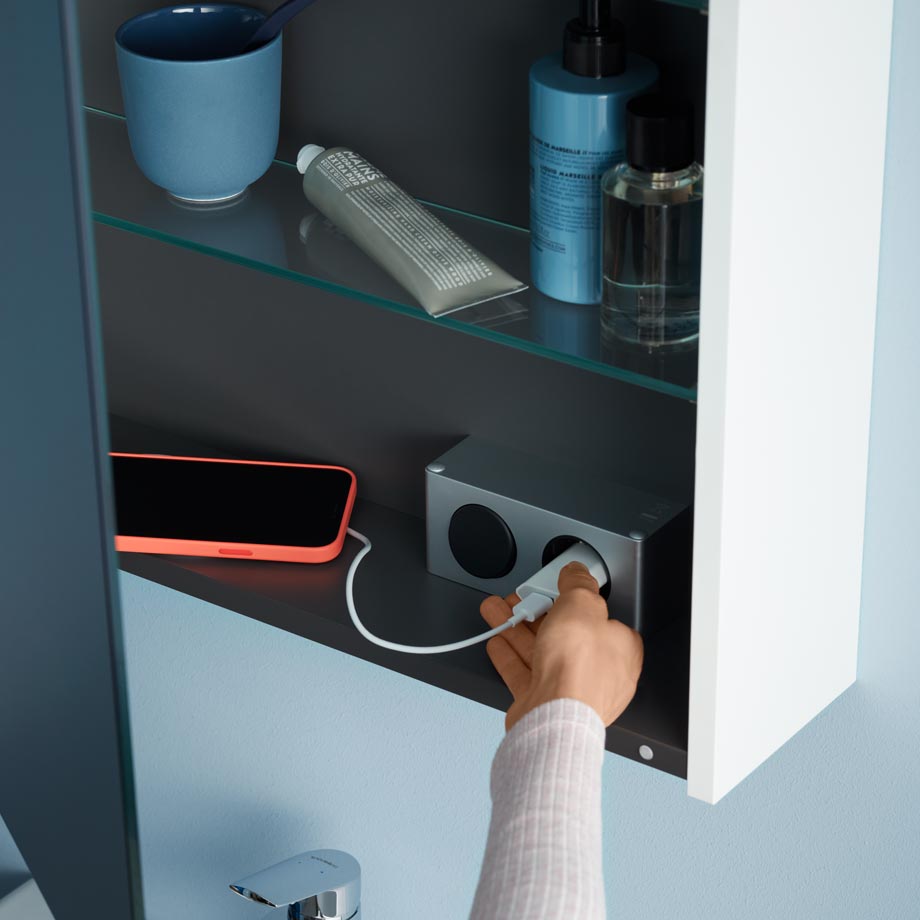
It's not just the water lines and drains; your bathroom floor plan also
needs to take electrical connections into account. In multi-story apartments
and condos, the water lines are often located in a central shaft, which the
kitchen and bathroom both connect to. If they're on the same story, they're
often located next to each other to make efficient use of the installations.
Determine the types and number of connections you will need based on your
preliminary considerations about the essential items for your bathroom.
Planning out the Lighting
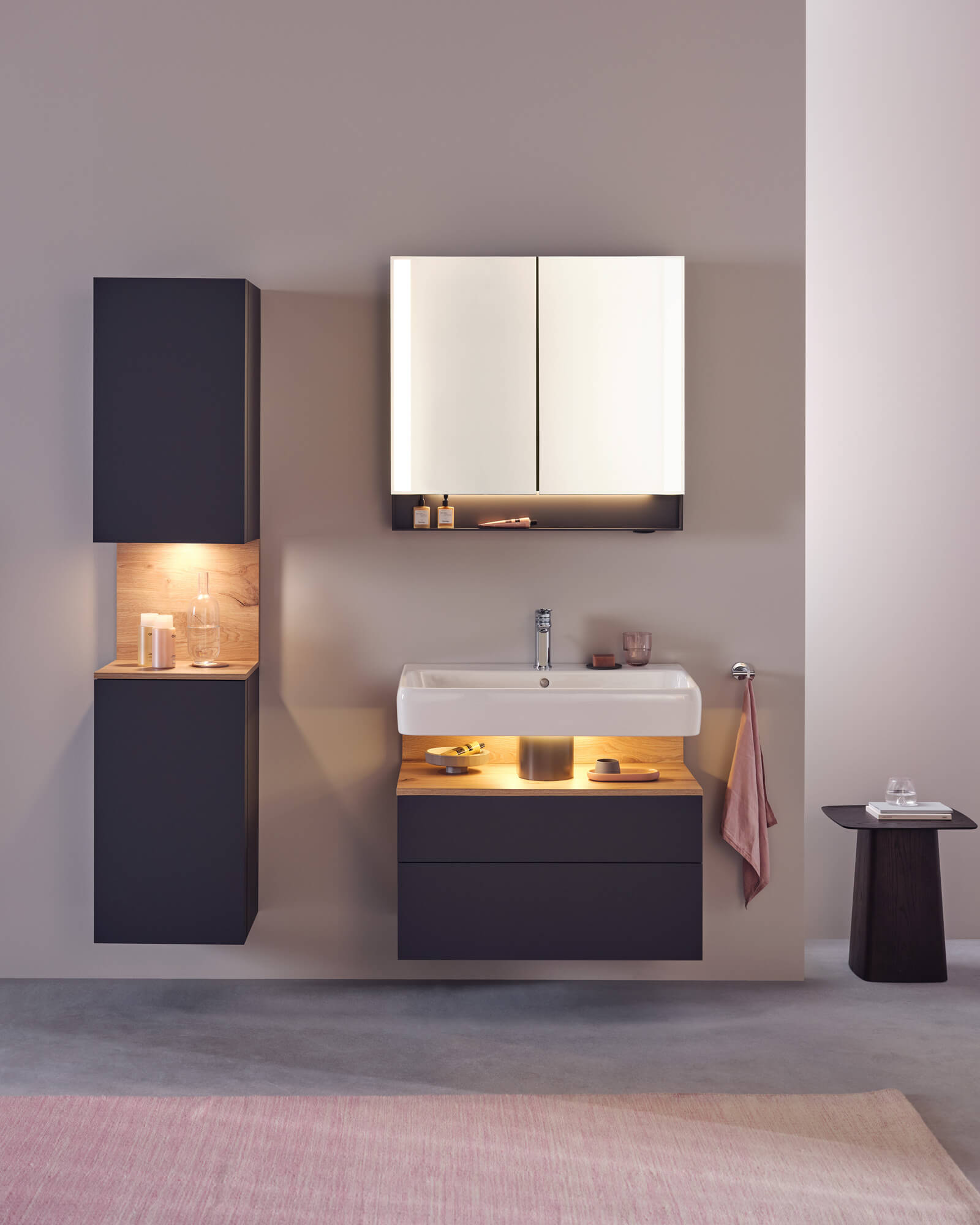
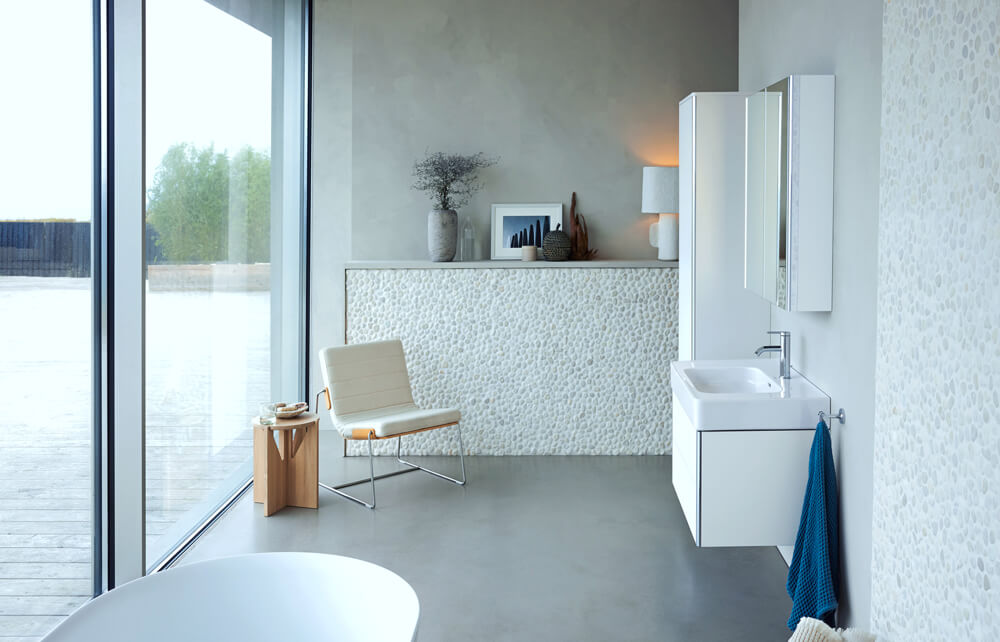
Planning out the lighting should always be a key
consideration when you create your bathroom floor plan. Installing enough adjustable lighting in
the bathroom is always an important consideration. Ideally, a variety of
different light sources should be included. Having a variety of light sources
means you'll have enough light to brush your teeth or put on makeup in front of
the bathroom mirror, and dimmer lighting for taking a relaxing bath.
Ventilation
Ventilation is another key consideration when drawing up your bathroom floor plan. Windows are the simplest solution, and they can also help supply natural light. Ideally, your bathroom should have at least one large window. However, modern heating systems can also provide the necessary airflow. Building codes require that bathrooms without any windows have ventilation installed.
Partition walls and T solutions
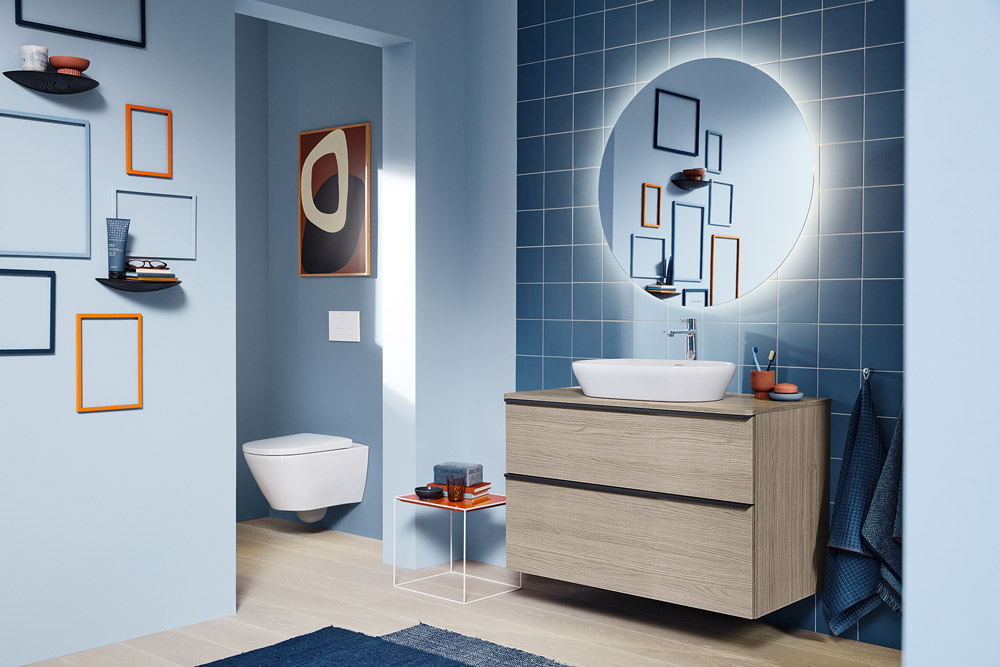
When drawing up your floor plan, think about the best
way to lay out the room in a way that makes it easier to decorate your bathroom
in an aesthetically pleasing way. Partition walls and "T" solutions
can be especially helpful in this regard. The T refers to the shape of the wall
when viewed from above. This type of solution is often used to create separate
niches in the bathroom, for example, for the toilet or shower. Bathroom floor plans that
include a walk-in shower
often rely on this type of layout. This creates separate areas within the room,
giving it a tidier and more homey impression. If the room has more than one
door, this type of solution also allows more than one person to use the
bathroom at the same time – which is extremely practical in a shared family bathroom, for example.
Layout
Some decisions will already be more or less made for you based on the available connections and the general outline of the bathroom floor plan. For example, if the bathroom floor plan is very narrow – sometimes referred to as a galley bathroom – the options may be limited. In general, however, a common rule of thumb is that the sink should be placed relatively close to the door. The toilet, on the other hand, should never face the door or be too close to it. Other than that, the deciding factor is what you personally prefer.
Distances
The distance between the various bathroom items and the walls is also an important consideration. The following distances are recommended for a typical bathroom.
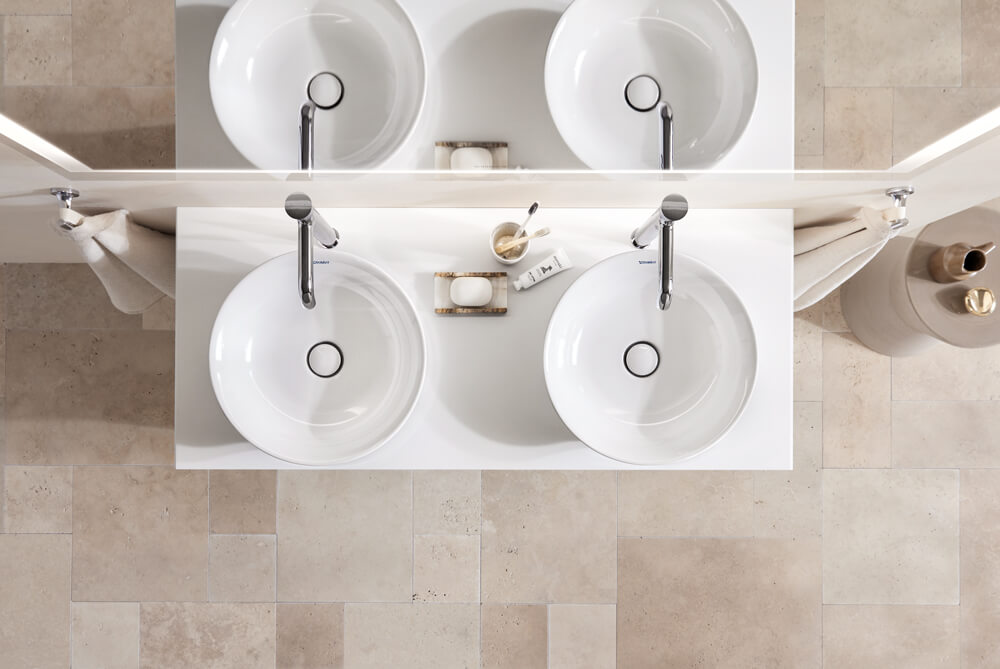
Sinks: Leaving at least 1'
10" (55 cm) of free space in front of the sink is recommended so you can
stand in front of it comfortably.
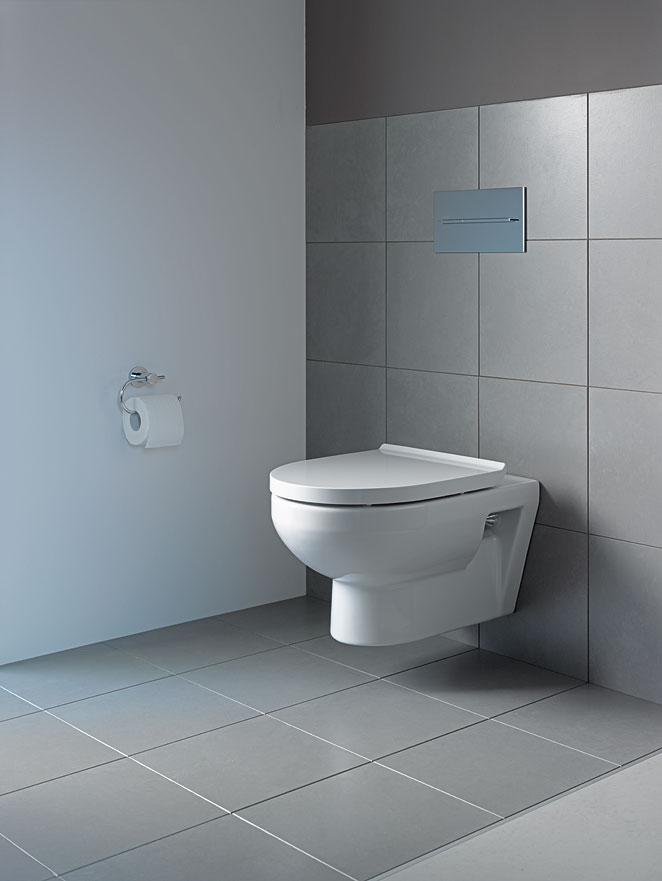
Toilets: The toilet should
also have at least 1' 10" (55 cm) of free space in front of it, preferably
around 2' 6" (75 cm). The center of the toilet should also be about 1'
4" (40 cm) away from other items and the walls.
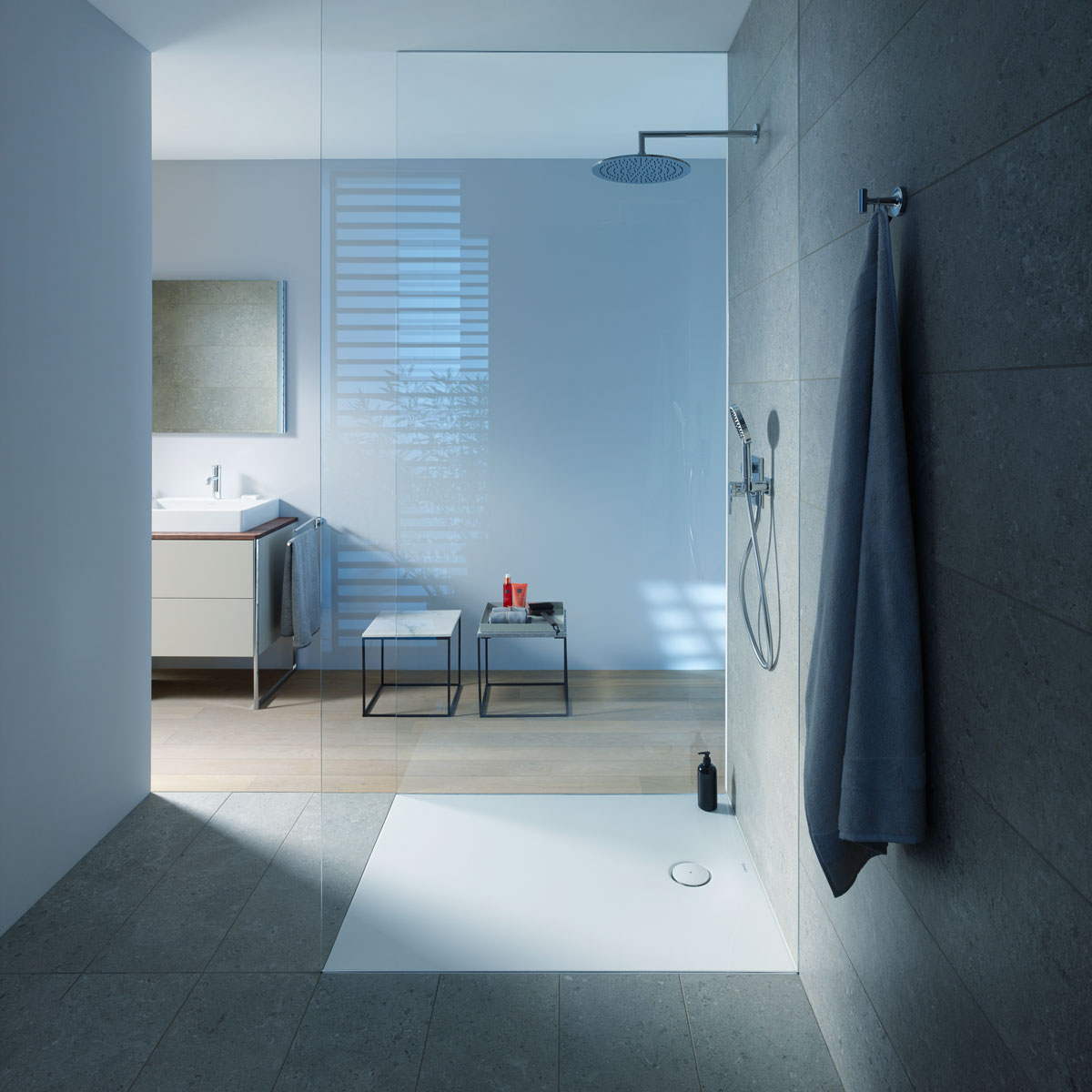
Showers: The 1' 10" (55
cm) rule also applies here, though this also depends on the type of door. If
the door opens outward, there should be at least 2' (60 cm) of clearance.
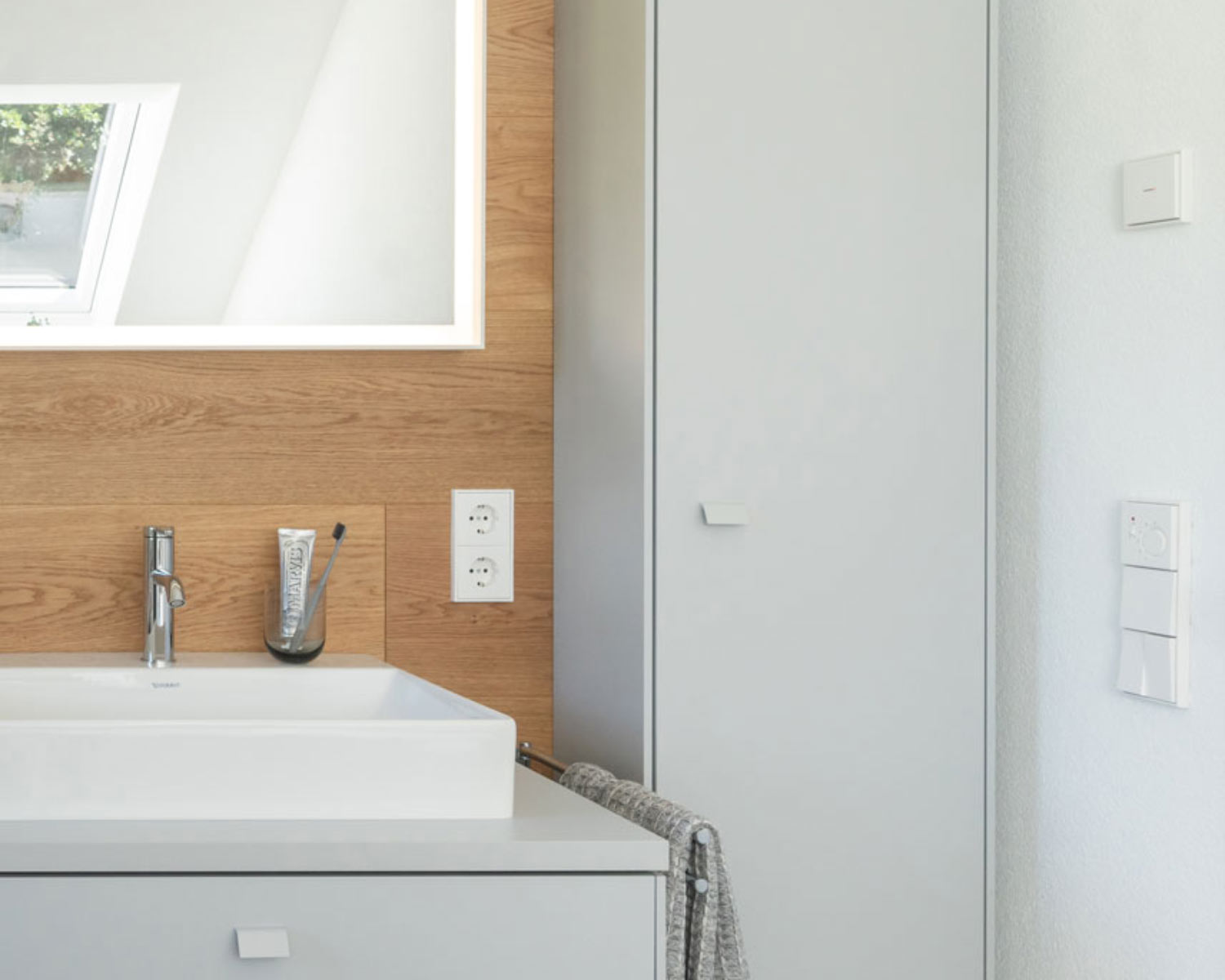
Electrical
appliances, outlets and switches: These items should be about 5' (150 cm) away
from the shower and bathtub.
If you are creating a floor plan for an accessible
bathroom or a bathroom
designed for seniors, you should leave a radius of about 4' (120 cm)
free around bathroom items; this figure is 5' (150 cm) for a
wheelchair-friendly bathroom.
