
The Dream Bathroom of Sebastian Herkner | Duravit


Innovative room solutions, exciting material compositions, and a completely new view of traditional bathroom design: With Zencha, Designer Sebastian Herkner has created a bathroom range that is inspired by traditional Japanese rituals and craftsmanship. However, the product designer completely reinterprets Zencha in his signature bathroom: stained wooden shingles on the wall, shell limestone on the floor, and a ceramic room divider form the basis for this unique bathroom range.

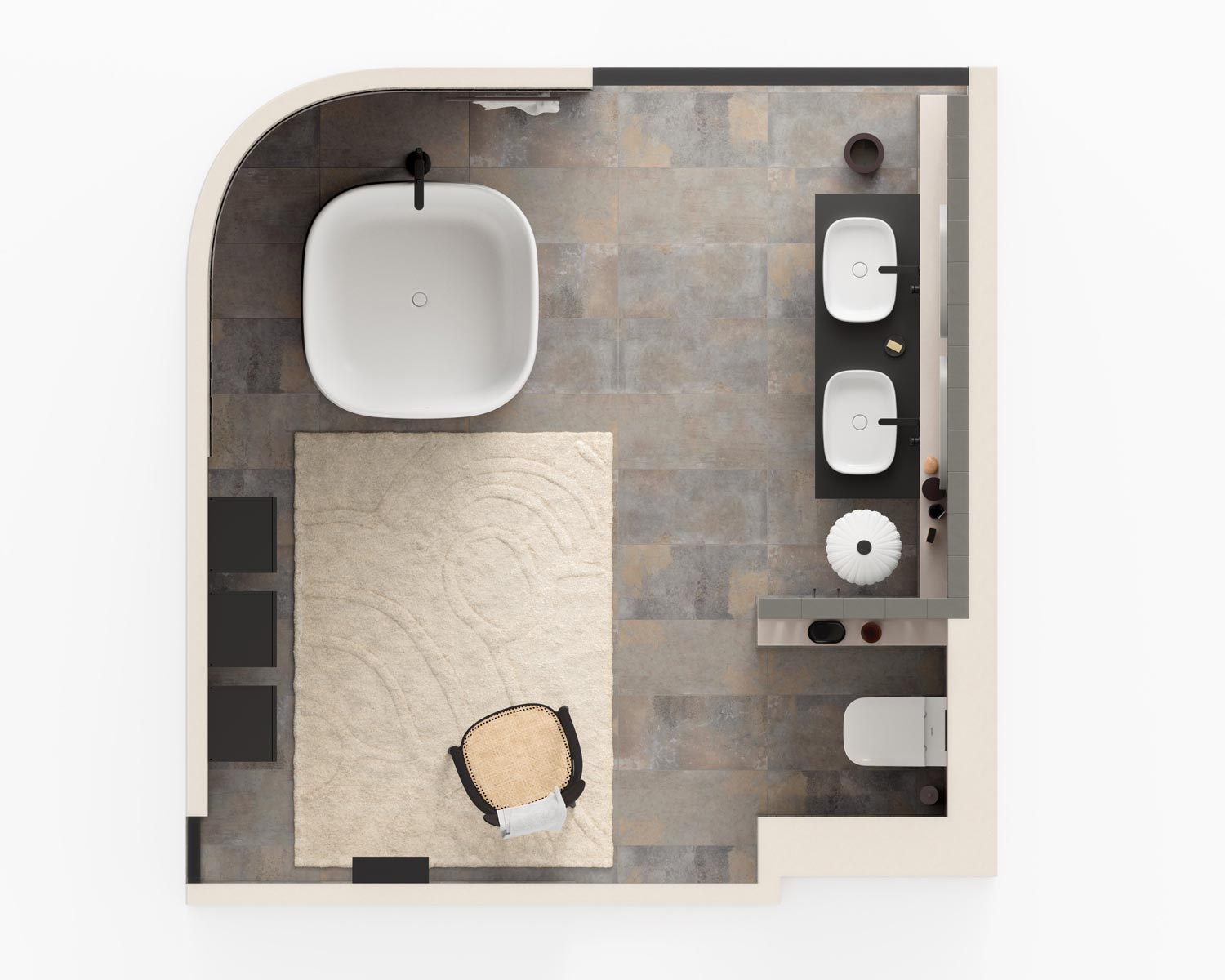
The floor plan
The
iconic Zencha bathtub is the reason for the square bathroom floor plan. The tub is not
only an eye-catcher, it also sets the direction in formal terms.

Bathtub as a center
The bathtub forms the heart of the room plan. The wall with wooden shingle cladding picks up its gently curving shape to create a harmonious overall image. The bathtub with its softness and spaciousness ultimately characterizes the entire bathroom design.

Washing area
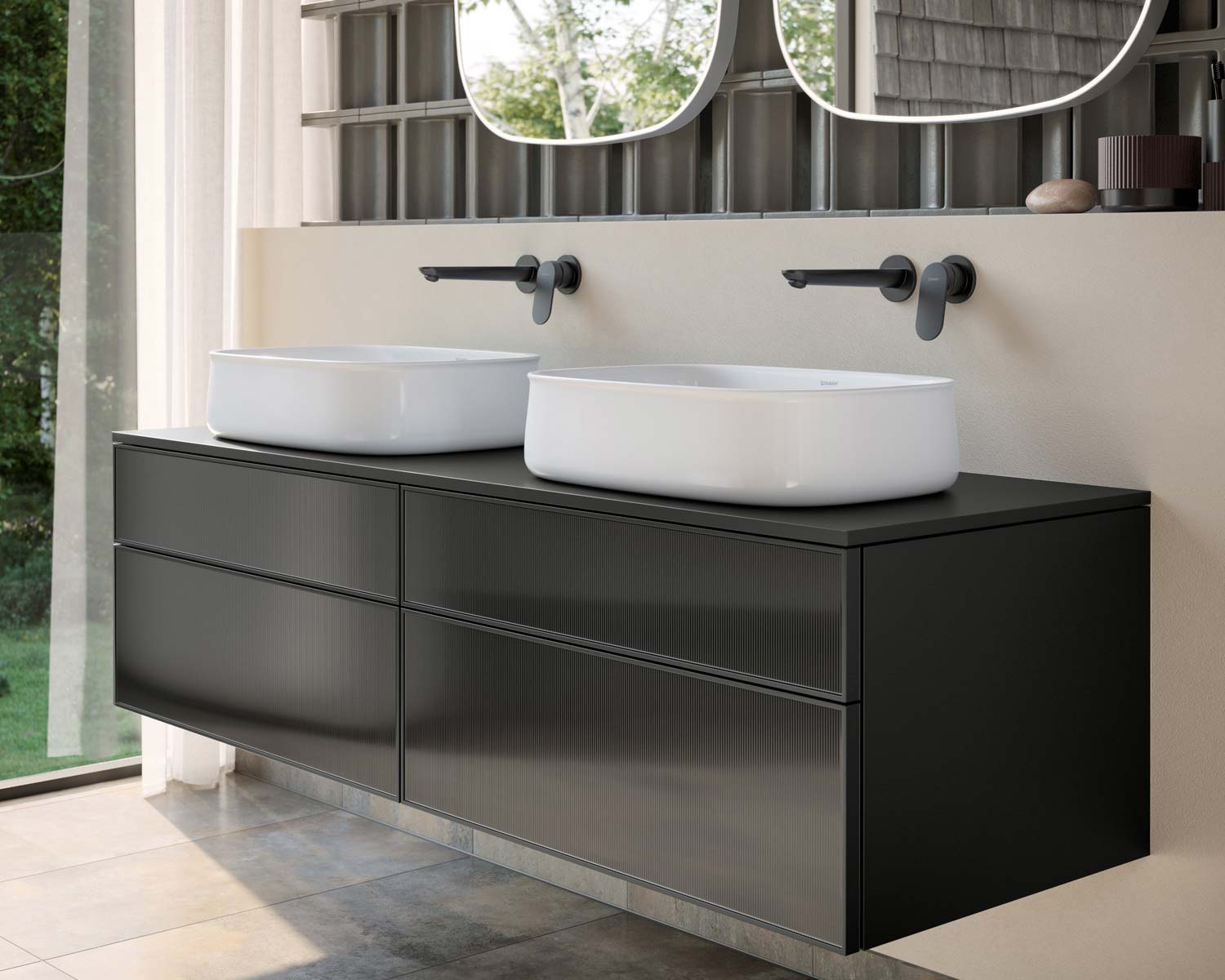
Sebastian Herkner opted for a double washbasin to manage the challenges of everyday life. The vanity units ensure visual order, the spacious above-counter basins made of DuraCeram® and matching mirrors offer space for personal hygiene.

Toilet area
The
ceramic room divider is additionally used as a separator to the Happy D.2 toilet. Its
asymmetric design allows intimacy while also preserving a sense of openness in
the room.
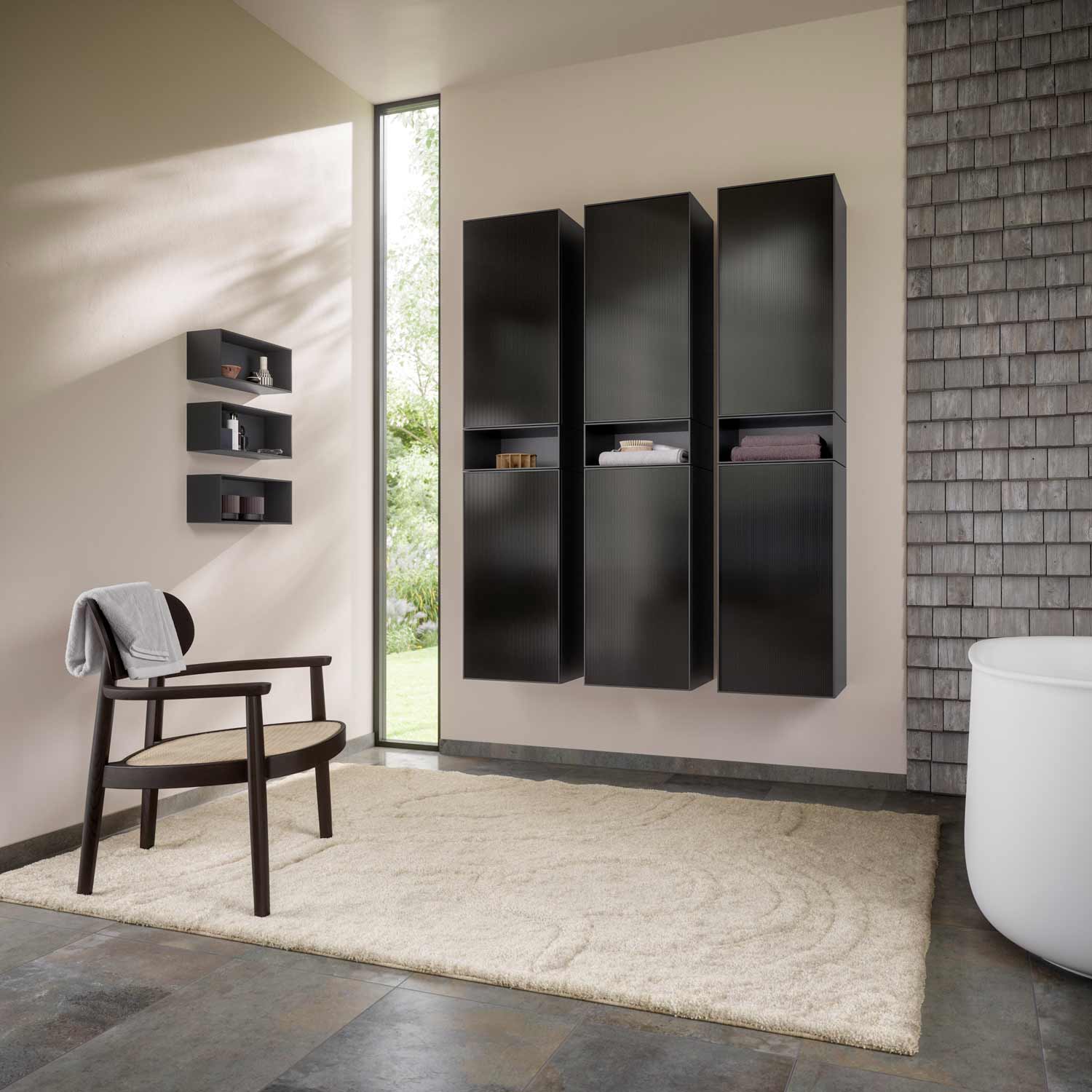
Additional furniture
The
additional tall cabinets of the Zencha series not only offer further storage, but they pick up on
the textured glass as a surface and harmoniously round off the overall
composition.
Herkner's personal signature
Sebastian
Herkner’s preference for authentic materials and an emotional, sensual
architecture that rejects strict rules is the starting point for his work. “After
all, we’re not looking for unnecessary luxury or decadence, but instead a room
that touches us personally, supports us in our everyday life, and lets us find
peace”.
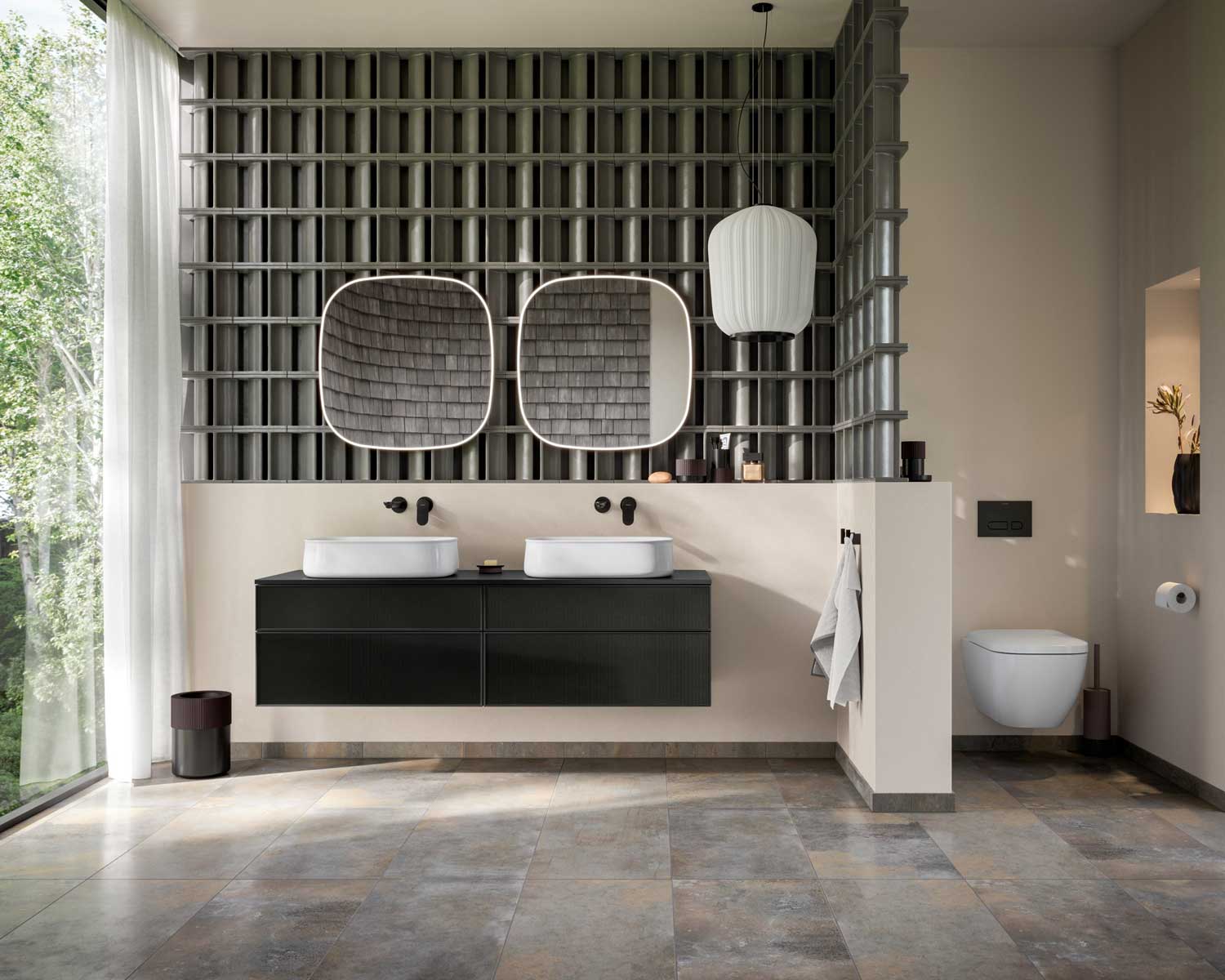
Fitting accessories
For
Sebastian Herkner a room is not complete until it can support tried-and-tested
everyday habits: a soap dish, a waste bin, several towel hooks, toilet paper
holder. Matching accessories ensure that everything is neatly and tidily stored and always within
reach.
